
There is nothing quite like a fresh cup of coffee in the morning. But when your first sip tastes harsh, burnt, or unpleasantly bitter, it can ruin the whole experience. If you use a drip coffee maker at home, you might wonder whether the machine is the problem or whether you are doing something wrong.
The good news is that you probably do not need a new coffee maker. In many cases, a few small changes to your brewing routine can make your coffee taste noticeably smoother.
Learning how to make coffee less bitter in a drip coffee maker starts with understanding what affects flavor. The type of beans you use, the grind size, the amount of coffee, and even leftover coffee oils in your machine can all make a difference.
Let’s look at some practical ways to improve your next cup without making your morning routine complicated.
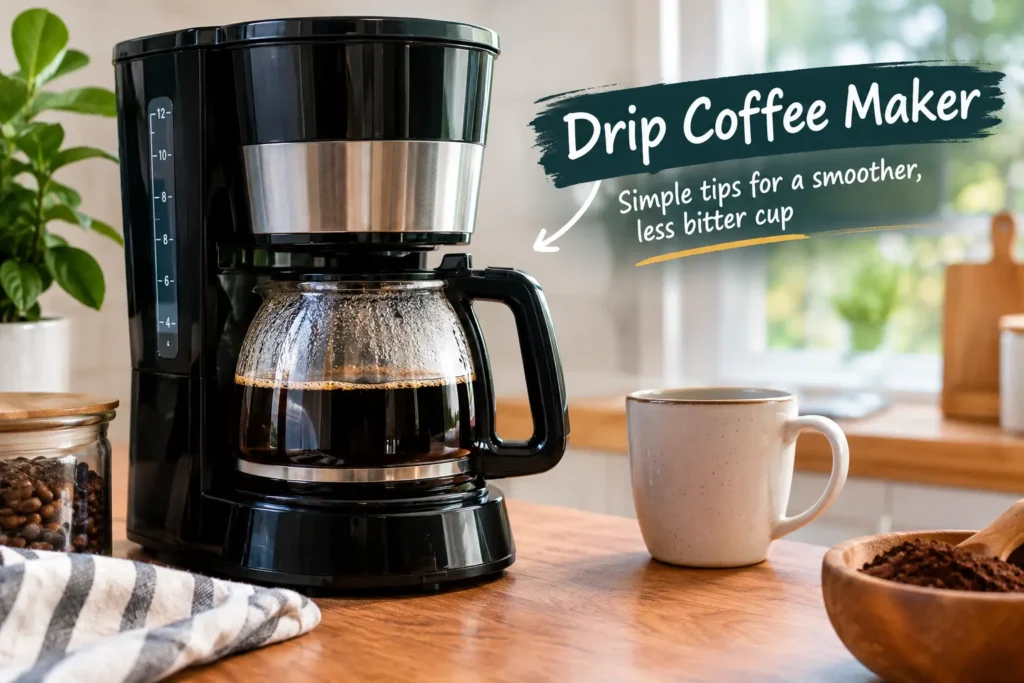
Why Does Coffee Taste Bitter?
A little bitterness is normal in coffee. However, if every cup tastes harsh or burnt, something may be affecting the brewing process.
One common cause is over-extraction. This happens when the brewing process pulls too much from the coffee grounds, potentially creating an unpleasant flavor. A grind that is too fine for your machine, an unsuitable brewing ratio, or uneven extraction can contribute to the problem.
Your coffee beans also matter. Some dark roasts naturally have stronger roasted, smoky, or bitter notes. Old coffee residue inside your machine may add unwanted flavors, too.
Before changing your entire setup, try the following adjustments one at a time. That way, you can discover what actually works for your coffee.
1. Adjust the Grind Size

If you use pre-ground coffee, check whether it is suitable for a drip coffee maker. A medium grind is a sensible starting point for most standard drip machines.
Coffee that is ground too finely may slow water flow or produce a different extraction than you want. On the other hand, grounds that are too coarse can make the coffee taste weak or under-extracted.
If you grind your own beans, make a small adjustment and brew another pot. Pay attention to whether the flavor becomes smoother or remains harsh.
A burr grinder can help produce more consistent grounds, but you do not have to buy expensive equipment just to improve your daily coffee.
For more brewing basics, see our guide to how to brew the perfect cup of coffee at home.
2. Try a Medium-Roast Coffee
The roast level can change the way your coffee tastes before you even start brewing.
Dark-roasted beans often have bold, smoky, or bittersweet flavors. If those flavors are not your preference, switching to a medium roast is an easy experiment.
Medium-roasted coffee can offer a balance of sweetness, acidity, and roasted flavor, although the exact taste depends on the beans and how they are prepared.
You do not need to replace all your coffee at once. Try a small bag of medium-roast beans and compare it with your usual brand using the same brewing method.
If the new coffee tastes better, you may have found a simple solution without changing your machine.
3. Measure Your Coffee and Water
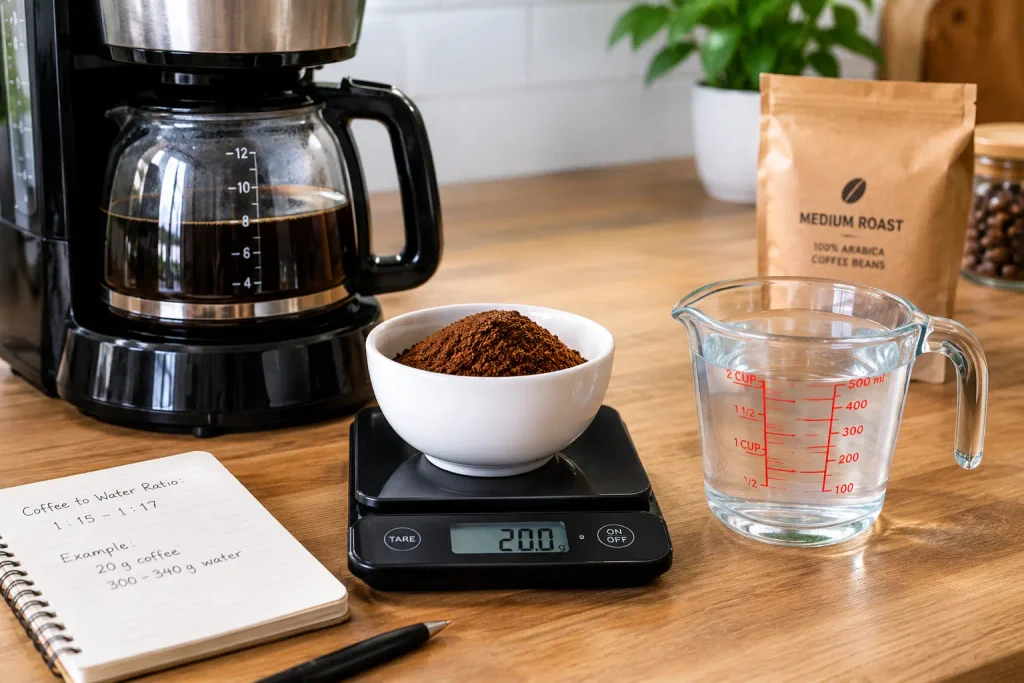
It is easy to add coffee grounds by eye, especially when you are in a hurry. Unfortunately, guessing can make it difficult to get the same flavor every morning.
Start with a coffee-to-water ratio of approximately 1:15 to 1:17 by weight. For example, 20 grams of coffee with 320 grams of water gives you a ratio of 1:16.
This is a starting point, not a strict rule. You can adjust it according to your taste and the instructions for your coffee maker.
If your coffee tastes too strong or intense, try using slightly less coffee while keeping the amount of water the same. If it tastes weak, make a small adjustment in the opposite direction.
Changing only one variable at a time makes it easier to understand the result.
4. Check Your Brewing Temperature
Water temperature affects how coffee compounds dissolve during brewing. However, a hotter temperature does not automatically mean a more bitter cup.
The final flavor also depends on grind size, brew strength, extraction, and the coffee itself. Research discussed by the Specialty Coffee Association highlights how important these factors can be when evaluating brewed coffee.
If your machine lets you adjust brewing settings, follow the manufacturer’s guidance and experiment carefully. If it does not, focus on the variables you can control, such as the grind, coffee ratio, and bean selection.
You can read more about the science in the Specialty Coffee Association’s article, How Hot Is Hot Enough?.
5. Clean Your Coffee Maker Regularly
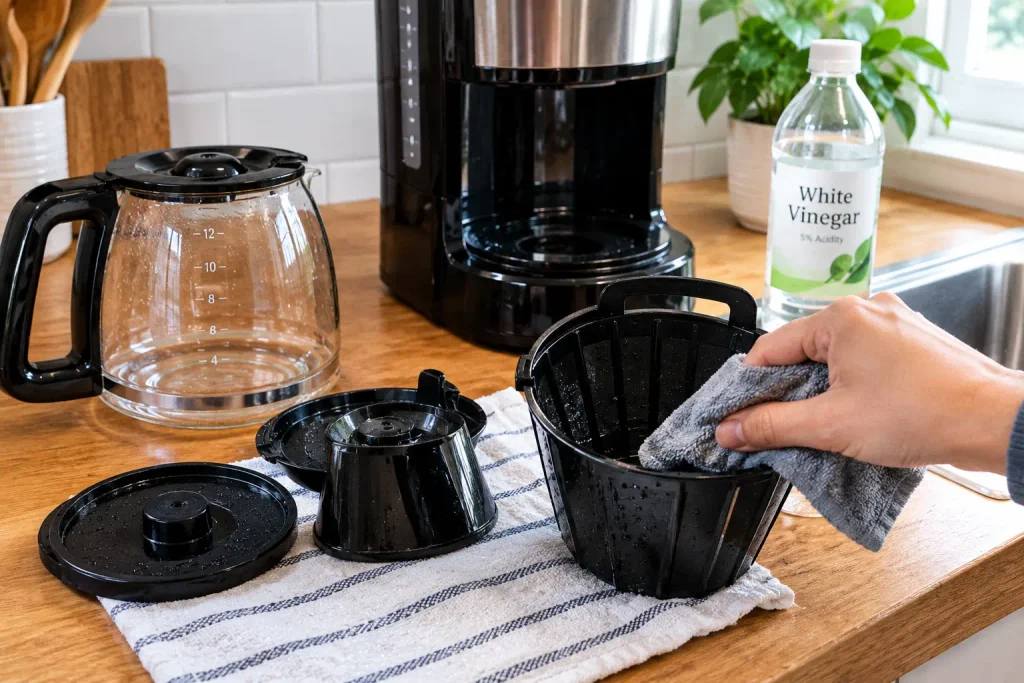
Sometimes the problem is not your coffee beans at all. It is the machine you use every day.
Coffee oils and leftover grounds can accumulate in the filter basket and carafe. Mineral deposits may also build up inside the machine, particularly if your water contains a lot of minerals.
These issues can affect the flavor of your next pot.
After brewing, wash the carafe and removable filter basket according to the manufacturer’s instructions. Clean any other removable parts as recommended, and descale the machine when necessary.
Avoid assuming that vinegar is safe for every model. Check the manual before choosing a cleaning product or descaling method.
If you use a different type of coffee machine, our beginner’s guide to how to use a coffee machine can help you understand the basics of operating and maintaining your equipment.
6. Use Fresh Water and Store Coffee Properly
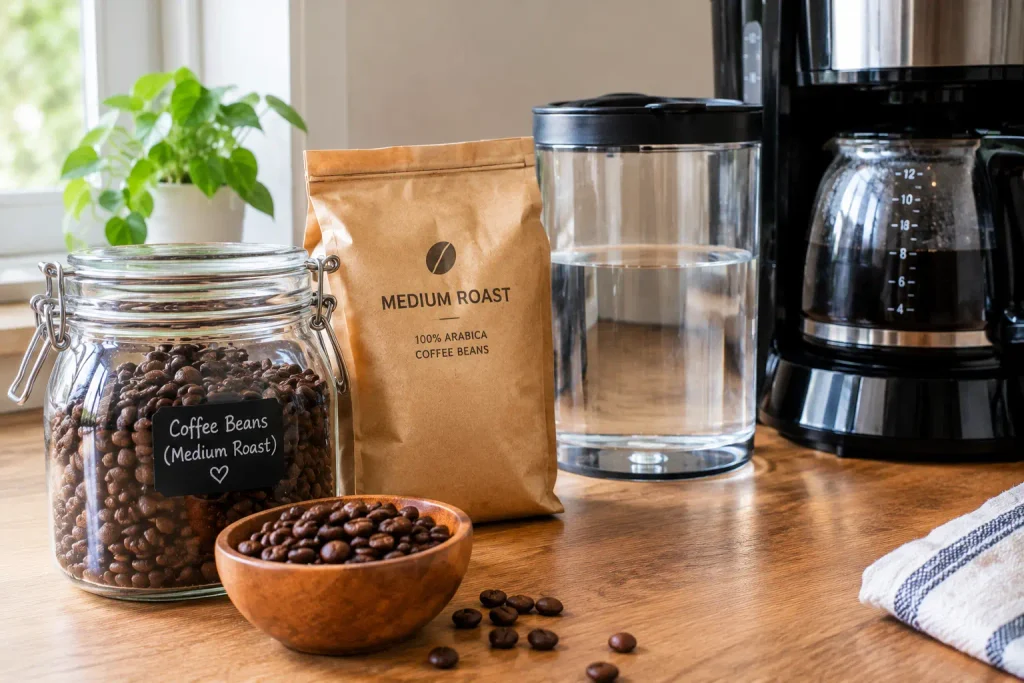
Coffee absorbs aromas and can lose freshness over time. The way you store your beans and the water you use can influence the taste of your finished drink.
Use fresh water for each brew rather than repeatedly reheating or reusing old water from the reservoir. If your tap water has a strong odor or flavor, try suitable filtered water.
Store coffee beans in an airtight container in a cool, dry place away from direct sunlight, heat, and moisture. Avoid leaving an open bag next to your stove or another source of heat.
If you buy whole beans, grind only what you need for your next batch. This can help preserve their aroma until you are ready to brew.
7. Do Not Leave Coffee on the Hot Plate Too Long
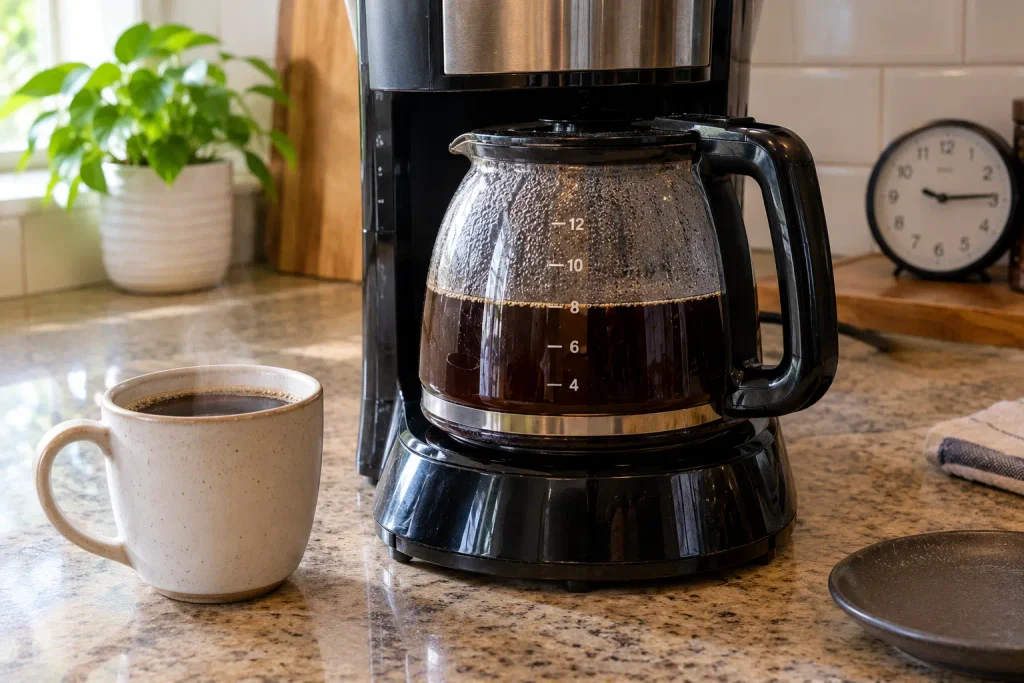
Have you ever made a full pot of coffee, forgotten about it, and returned an hour later? The coffee may taste harsher than it did when it was fresh.
Extended heating can change the flavor of brewed coffee. If you make more than you can drink right away, consider transferring the remaining coffee to a clean, insulated thermal carafe if your machine’s instructions allow it.
Another option is to brew a smaller batch. This is particularly useful if you usually drink only one or two cups.
The goal is simple: enjoy your coffee while it is fresh instead of leaving it on a hot plate for an extended period.
8. Try a Simple Brewing Test
If you have tried several tips and your coffee is still bitter, do not change everything at once. A small experiment can help you identify the cause.
Here is a simple routine to try over the next few mornings:
- First morning: Brew your usual coffee and note the flavor.
- Second morning: Use the same beans and water amount, but adjust the grind slightly if possible.
- Third morning: Return to your preferred grind and try a medium-roast coffee.
- Fourth morning: Clean the machine and brew again using your best settings so far.
Keep a short note about which cup tastes better. You might discover that the problem was the roast level rather than the machine, or that a small grind adjustment made all the difference.
Once you find a combination you like, keep the measurements consistent.
What If You Prefer Smooth, Less Bitter Coffee?

If you have tried these adjustments and still prefer a smoother style of coffee, you could experiment with another brewing method.
Cold brew is prepared by steeping coffee grounds in cool or room-temperature water for several hours. Many people find it less bitter and less acidic-tasting than conventional hot-brewed coffee, although the result depends on the beans and preparation.
If that sounds appealing, read our guide to how to make cold brew coffee at home.
You do not have to abandon your drip coffee maker. It is simply another option to explore if you enjoy experimenting with coffee at home.
Frequently Asked Questions
Why does my drip coffee taste bitter even when I use good beans?
Good beans can still produce bitter coffee if the grind size, coffee-to-water ratio, or extraction is unsuitable. Dirty equipment and a naturally dark roast may also contribute. Try adjusting one factor at a time.
What grind size is best for drip coffee?
A medium grind works well as a starting point for many standard drip coffee makers. Your ideal setting may vary depending on the machine, filter, and beans.
Does adding more water make coffee less bitter?
Using more water with the same amount of coffee makes the brew less concentrated, but it does not necessarily correct an extraction problem. Try adjusting your coffee ratio gradually and pay attention to the overall flavor.
Is medium-roast coffee less bitter than dark roast?
Medium-roasted coffee often has fewer pronounced smoky or heavily roasted notes than dark-roasted coffee. However, bitterness depends on the beans and brewing method, so personal results can vary.
How often should I clean my drip coffee maker?
Wash the carafe and removable parts regularly, ideally after use. Descale the machine according to the manufacturer’s recommendations and your water conditions.
Can I make smooth coffee without buying a new coffee maker?
Yes. Start by checking the grind size, choosing beans you enjoy, measuring the coffee and water, and cleaning your existing machine. These adjustments may improve flavor without requiring new equipment.
Final Thoughts
You do not need to be a coffee expert to make a better cup at home. If your drip coffee tastes too bitter, start with the basics: choose a roast you enjoy, use a suitable grind, measure your coffee and water, and keep your machine clean.
Give each adjustment a fair try instead of changing everything at once. Over time, you will learn which combination works best for your taste.
A smoother morning coffee may be only a small adjustment away.