
There’s nothing quite like the aroma of freshly brewed coffee in the morning. But achieving that perfect cup at home can feel tricky. Too bitter, too sour, too weak – we’ve all been there.
The truth is, brewing great coffee doesn’t require expensive equipment. With a few simple techniques and the right ingredients, you can make café‑quality coffee in your own kitchen.
In this guide, you’ll learn:
- How to choose the right coffee beans
- The best brewing methods for different tastes
- Step‑by‑step instructions for each method
- Common mistakes and how to fix them
- Tips for storing coffee beans
Whether you live in the USA, UK, Canada, or Australia, these principles work for any home kitchen.
If you’re new to coffee brewing, start with our step‑by‑step guide on how to use a coffee machine.
Step 1: Start with Fresh, Quality Coffee Beans
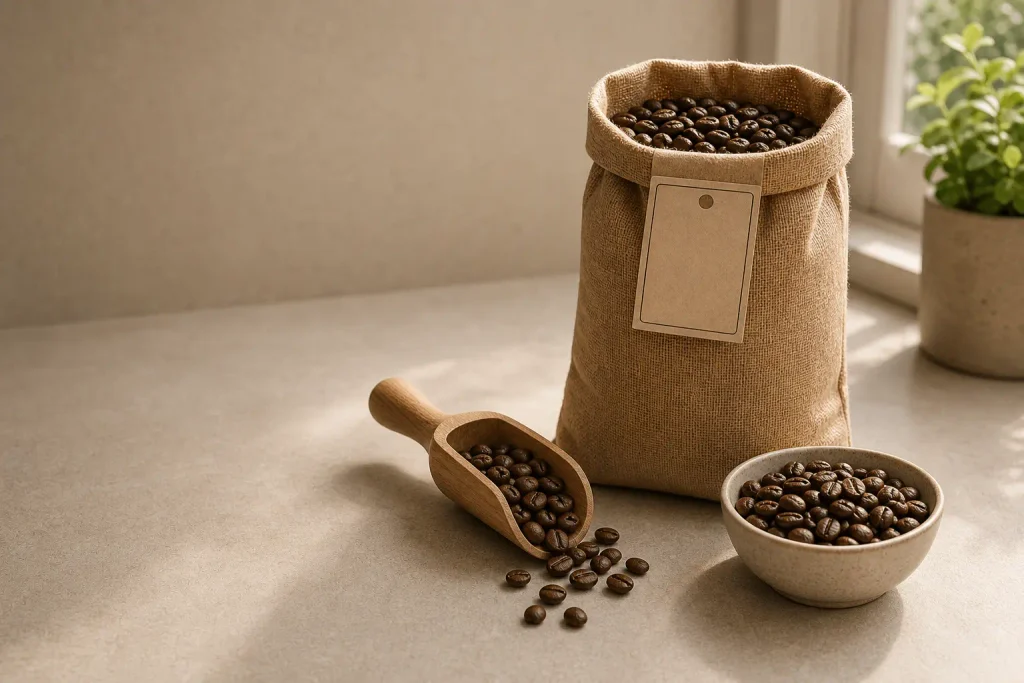
Your coffee is only as good as the beans you use. Here’s what to look for:
- Roast date: Always check the roast date on the bag. Use beans within 2–4 weeks of roasting for maximum flavor.
- Whole beans vs pre‑ground: Buy whole beans and grind them just before brewing with a compact coffee grinder.
- Roast level: Choose based on your taste preference.
- Light roast: fruity, acidic, complex
- Medium roast: balanced, smooth, versatile
- Dark roast: bold, rich, low acidity
- Origin: Single‑origin beans have distinct flavour profiles (e.g., Ethiopian – floral, Colombian – nutty). Blends offer consistency.
Pro tip: Store beans in an airtight container away from light, heat, and moisture. Never refrigerate or freeze – it damages the beans.
Step 2: Choose Your Brewing Method
Not all brewing methods are the same. Each affects the taste, body, and aroma of your coffee. Here are the most popular methods for home use:
| Method | Best For | Brew Time | Difficulty |
|---|---|---|---|
| French Press | Full‑bodied, rich coffee | 4 minutes | Easy |
| Pour‑Over | Clean, bright, complex flavours | 3–4 minutes | Medium |
| Drip Coffee Maker | Large batches, convenience | 5–10 minutes | Easy |
| Aeropress | Smooth, strong, quick | 2 minutes | Easy |
| Moka Pot | Strong, espresso‑like | 5 minutes | Medium |
| Cold Brew | Smooth, low acidity | 12–24 hours | Easy |
For this guide, we’ll cover the three most popular methods: French Press, Pour‑Over, and Drip Coffee Maker.
Step 3: How to Brew Using a French Press
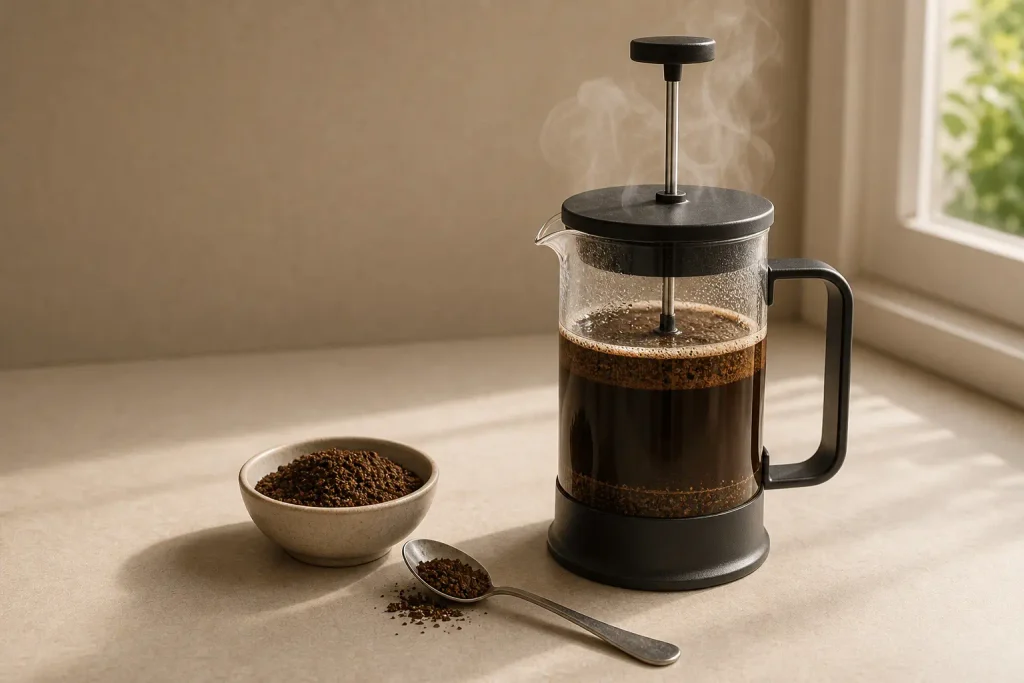
The French press is loved for its full body and rich flavour. It’s also one of the simplest methods.
What You Need
- French press (32 oz or larger recommended)
- Coarse ground coffee (like sea salt texture)
- Hot water (195–205°F / 90–96°C)
- Spoon
- Timer
Instructions
- Boil water and let it sit for 30 seconds after boiling.
- Add coffee grounds – use 1:15 coffee‑to‑water ratio (e.g., 30g coffee to 450ml water).
- Pour a small amount of water over the grounds to bloom (just enough to cover). Wait 30 seconds.
- Pour the remaining water slowly, stirring gently with a spoon.
- Place the lid on with the plunger pulled up. Wait 4 minutes.
- Press the plunger down slowly and evenly.
- Pour immediately – don’t let the coffee sit on the grounds, or it becomes bitter.
Pro Tips
- For a cleaner cup, use a paper filter after pressing (optional).
- Experiment with steep time: 3:30 for lighter flavour, 4:30 for stronger.
Step 4: How to Brew Using Pour‑Over
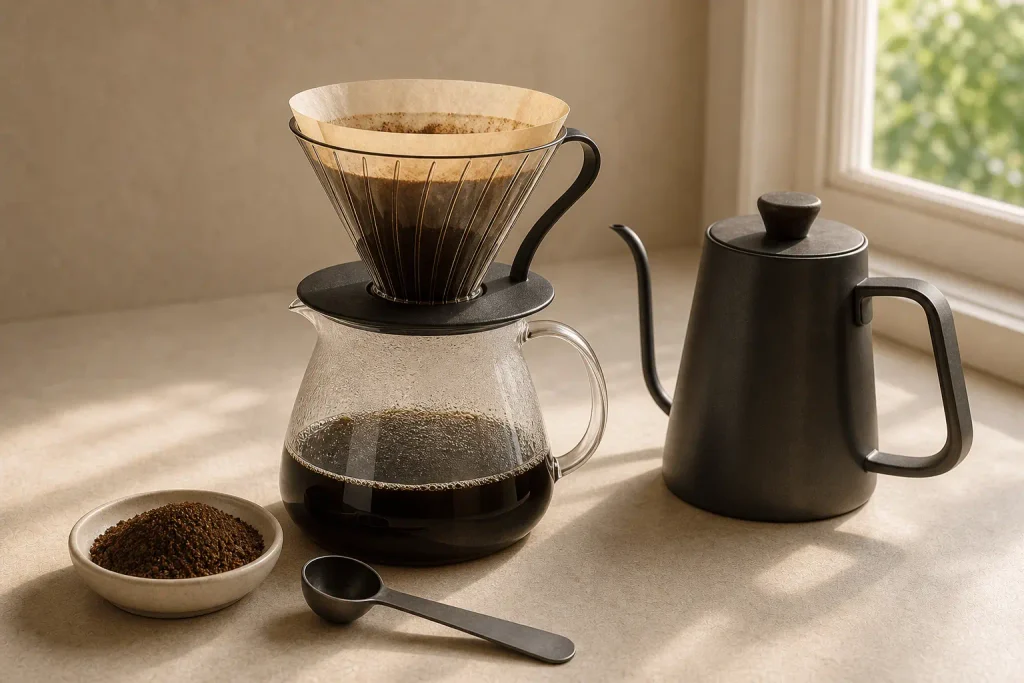
Pour‑over gives you complete control over extraction. It produces a clean, bright cup.
What You Need
- Pour‑over dripper (V60, Chemex, or Kalita Wave)
- Paper filter (rinsed with hot water)
- Medium‑fine ground coffee (like table salt)
- Gooseneck kettle (recommended for precise pouring)
- Scale and timer
Instructions
- Place the filter in the dripper and rinse with hot water (discard rinse water).
- Add coffee grounds – use 1:16 ratio (e.g., 20g coffee to 320ml water).
- Start the timer and pour 2x the coffee weight in water (e.g., 40g) over the grounds. Wait 30–45 seconds (bloom).
- Continue pouring in a slow, steady spiral from centre to edges, maintaining a consistent water level.
- Total pour time should be 2:30–3:30 minutes.
- Remove the dripper once all water has passed through.
- Swirl the carafe gently and serve.
Pro Tips
- Use a gooseneck kettle for better control.
- Adjust grind size: if brew time is too fast (under 2:00), grind finer. If too slow (over 4:00), grind coarser.
Step 5: How to Brew Using a Drip Coffee Maker
Drip coffee makers are convenient and perfect for multiple cups. Many homes have one.
What You Need
- Drip coffee maker
- Paper filter (or permanent filter)
- Medium ground coffee
- Cold, filtered water
Instructions
- Fill the water reservoir with fresh cold water to the desired level.
- Place a filter in the basket.
- Add coffee grounds – use 2 tablespoons per 6 oz cup for medium strength.
- Start the brew cycle.
- Serve immediately once brewing finishes – don’t leave coffee on the hot plate for more than 30 minutes.
Pro Tips
- Clean your machine regularly (see cleaning section below).
- Use a thermal carafe instead of a glass one to keep coffee hot without burning.
Step 6: Master the Coffee‑to‑Water Ratio
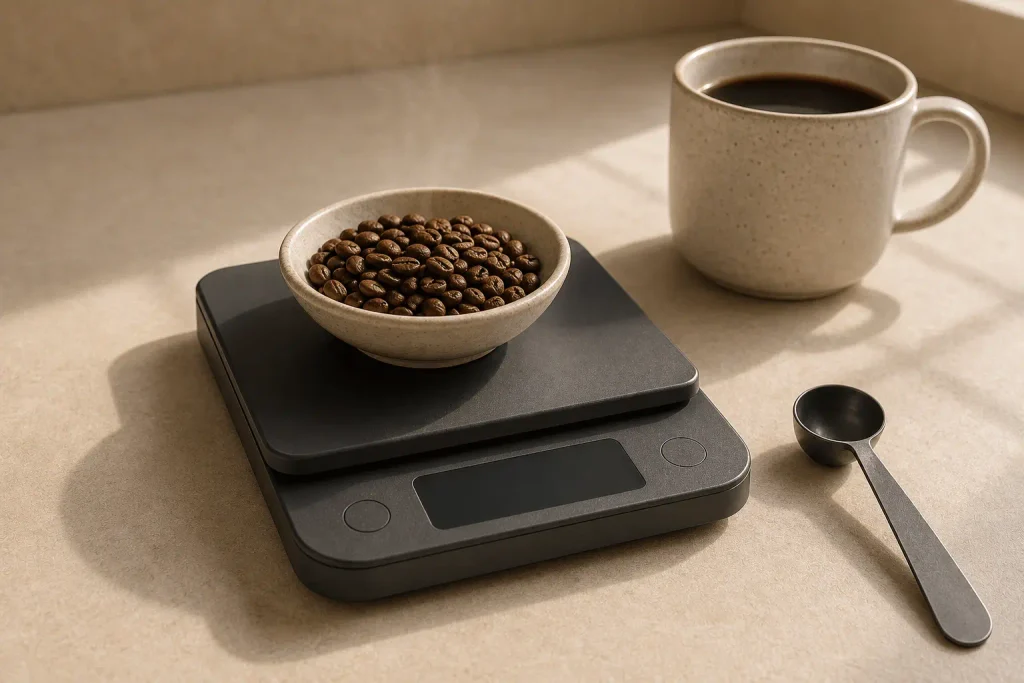
This is the most important variable. Too much coffee = bitter, too little = weak. Use this as your starting point:
| Method | Ratio (Coffee : Water) | Example |
|---|---|---|
| French Press | 1:15 | 30g coffee + 450ml water |
| Pour‑Over | 1:16 | 20g coffee + 320ml water |
| Drip Coffee Maker | 1:17 | 40g coffee + 680ml water (makes 4 cups) |
| Aeropress | 1:14 | 15g coffee + 210ml water |
| Cold Brew | 1:8 | 100g coffee + 800ml water (concentrate) |
Adjust to taste: If your coffee is too strong, add more water. If too weak, add more coffee. Keep notes until you find your perfect ratio.
Step 7: Water Temperature Matters
The ideal water temperature for brewing is 195–205°F (90–96°C). Boiling water (212°F) can scorch the grounds and cause bitterness.
- No thermometer? Bring water to a boil, then let it sit for 30–45 seconds before pouring.
- For cold brew, use room temperature or cold water and steep for 12–24 hours.
Step 8: Grind Your Beans Just Before Brewing
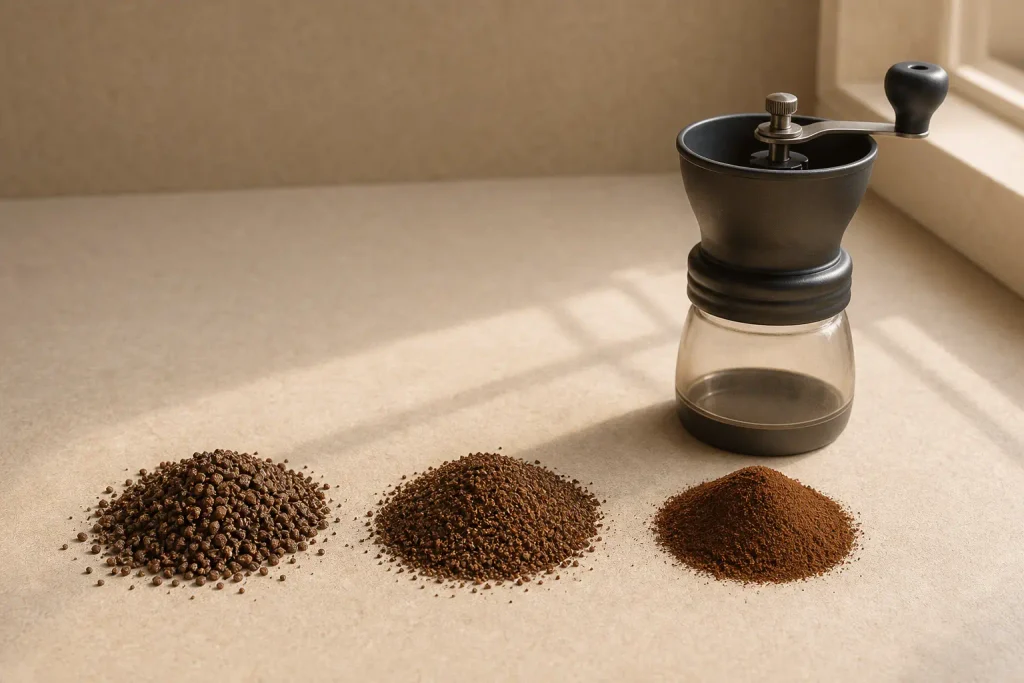
Freshly ground coffee releases aromatic oils and gases that make your coffee taste better. Use a burr grinder (not blade) for consistent particle size.
| Brew Method | Grind Size |
|---|---|
| French Press | Coarse |
| Pour‑Over | Medium‑fine |
| Drip Coffee Maker | Medium |
| Aeropress | Fine |
| Espresso | Very fine |
| Cold Brew | Coarse |
Pro tip: Grind only what you need for each brew. Pre‑ground coffee loses flavour within 15 minutes.
Step 9: Common Brewing Mistakes and How to Fix Them
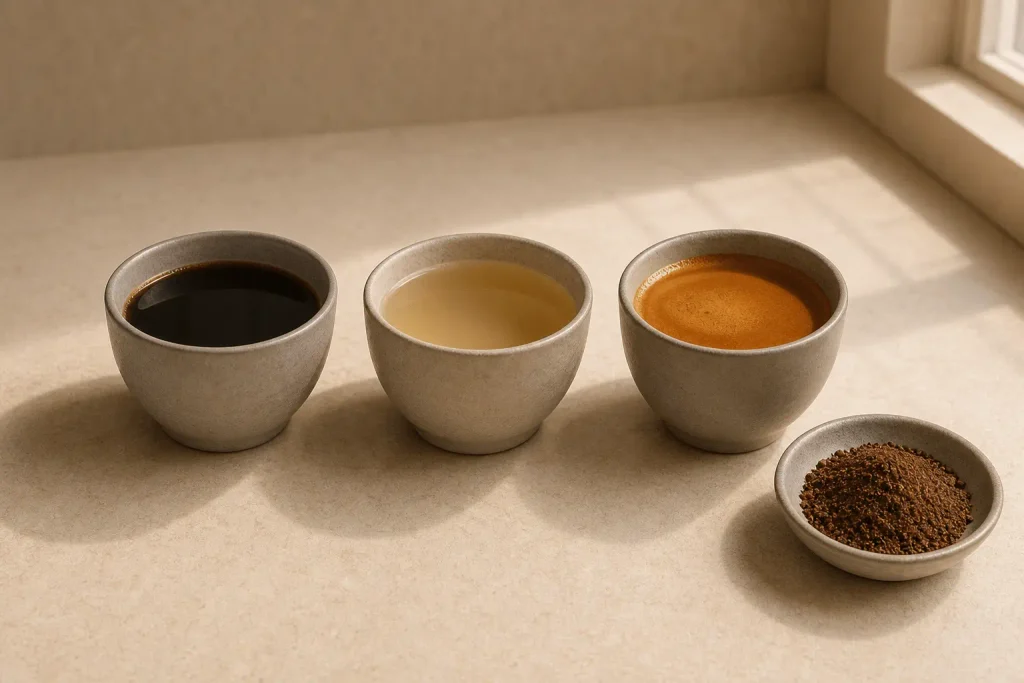
| Problem | Possible Cause | Solution |
|---|---|---|
| Bitter taste | Water too hot, over‑extraction, too fine grind | Lower water temp, shorter brew time, coarser grind |
| Sour taste | Under‑extraction, water too cool, too coarse grind | Increase brew time, hotter water, finer grind |
| Weak coffee | Too little coffee, too coarse grind, short brew | Use more coffee, finer grind, longer steep |
| Muddy coffee (French press) | Too fine grind, plunging too fast | Use coarse grind, plunge slowly |
| Paper taste (pour‑over) | Filter not rinsed | Always rinse filter with hot water before brewing |
Step 10: Clean Your Equipment Regularly
Residual coffee oils and mineral buildup affect taste. Clean after every use.
- Daily: Rinse carafe, filter basket, and any removable parts with warm water.
- Weekly: Wash with mild soap and a soft sponge. For French press, disassemble and clean the plunger.
- Monthly (for electric machines): Descale with vinegar or a descaling solution (see coffee machine guide).
Why it matters: Old coffee oils go rancid and ruin the flavour of your next brew.
Frequently Asked Questions
How long should I brew coffee?
French press: 4 minutes. Pour‑over: 2:30–3:30. Drip maker: automatic. Cold brew: 12–24 hours.
Can I reuse coffee grounds?
Technically yes, but the second brew will be very weak and bitter. It’s better to compost used grounds.
What’s the best water for coffee?
Filtered water with moderate mineral content (not distilled, not hard tap water).
How do I store coffee beans?
In an airtight container, in a cool, dark cupboard. Do not refrigerate or freeze.
Why does my coffee taste different from the café?
They likely use a different roast, grind size, water temperature, or brewing ratio. Experiment at home.
Conclusion
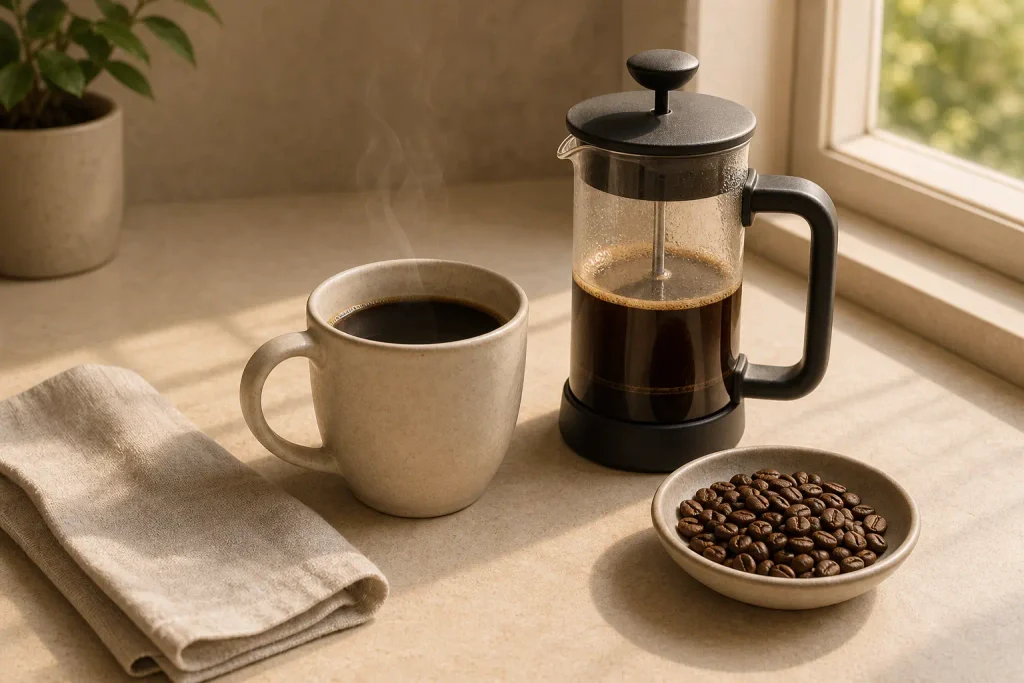
Brewing the perfect cup of coffee at home is a skill anyone can learn. Start with fresh beans, choose the right method for your taste, and pay attention to the details – water temperature, grind size, and brew time.
With practice, you’ll be able to make coffee that rivals your favourite café. And the best part? You can enjoy it in your pyjamas.
Ready to take your coffee to the next level? Try our [BLACK+DECKER One‑Touch Coffee and Spice Grinder Review] to ensure your beans are ground perfectly every time.