
French press coffee is one of the easiest ways to make rich, flavorful coffee at home. You do not need an expensive espresso machine or complicated equipment. With a French press, freshly ground coffee, hot water, and a few minutes, you can make a delicious cup of coffee with a smooth and satisfying flavor.
If you are new to French press brewing, this guide will show you exactly how to make French press coffee at home, including the ideal coffee-to-water ratio, grind size, water temperature, brewing time, and common mistakes to avoid.
What Is French Press Coffee?
A French press is a simple coffee brewing device that uses immersion brewing. Instead of quickly passing water through coffee grounds, the coffee grounds remain immersed in hot water for several minutes.
After brewing, a metal filter attached to the plunger separates the coffee grounds from the finished coffee.
This brewing method allows more of the natural oils from the coffee beans to remain in your cup, giving French press coffee a fuller body and richer flavor.
What You Need to Make French Press Coffee

Before you start, gather these basic items:
- French press
- Fresh coffee beans
- Coffee grinder
- Fresh water
- Kettle
- Measuring scale or spoon
- Coffee mug
Freshly ground coffee usually provides better flavor than pre-ground coffee. If you want to learn more about choosing and using a grinder, check out our guide on How to Use a Coffee and Spice Grinder.
What Coffee Is Best for a French Press?
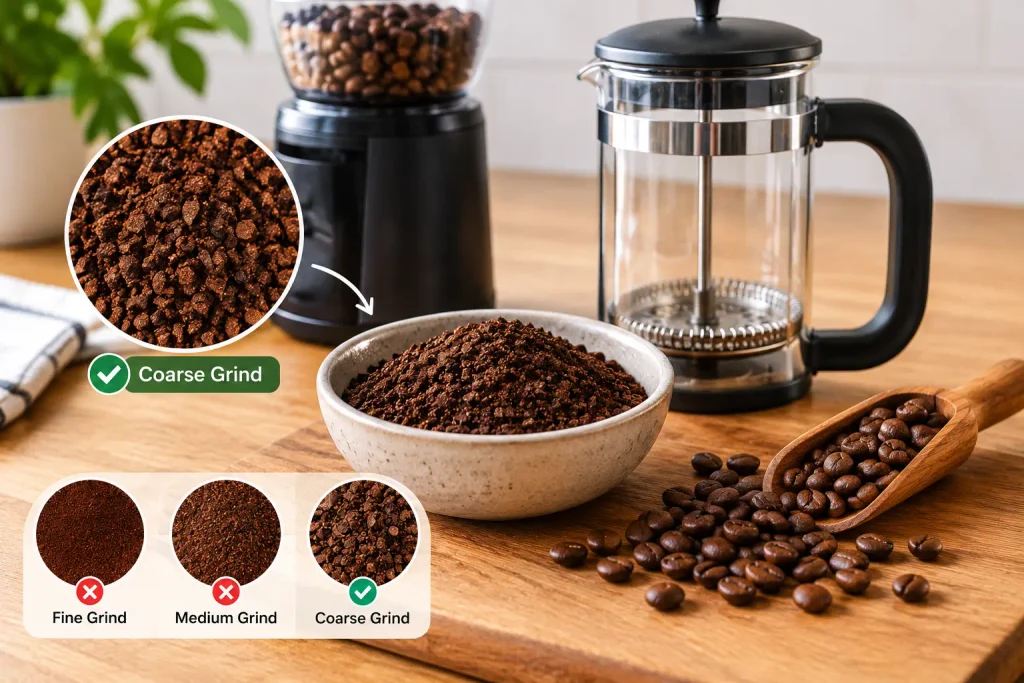
For French press coffee, a medium-to-dark roast can work well, but the best choice ultimately depends on your personal taste.
Whole coffee beans are generally a good option because grinding them immediately before brewing helps preserve their aroma and flavor.
The grind size is also important. French press coffee generally works best with a coarse grind. Coffee that is ground too finely can pass through the metal filter and make the final drink muddy or overly bitter.
For more information about getting better coffee from your grinder, you can also read our guide on How to Clean a Coffee Grinder.
French Press Coffee Ratio
A good starting point is approximately:
1 gram of coffee for every 15–17 grams of water.
For example:
- 20 grams of coffee + 300 ml water
- 30 grams of coffee + 450 ml water
- 40 grams of coffee + 600 ml water
You can adjust the ratio depending on how strong you like your coffee.
If the coffee tastes too weak, slightly increase the amount of coffee. If it tastes too strong, use a little more water.
How to Make French Press Coffee Step by Step
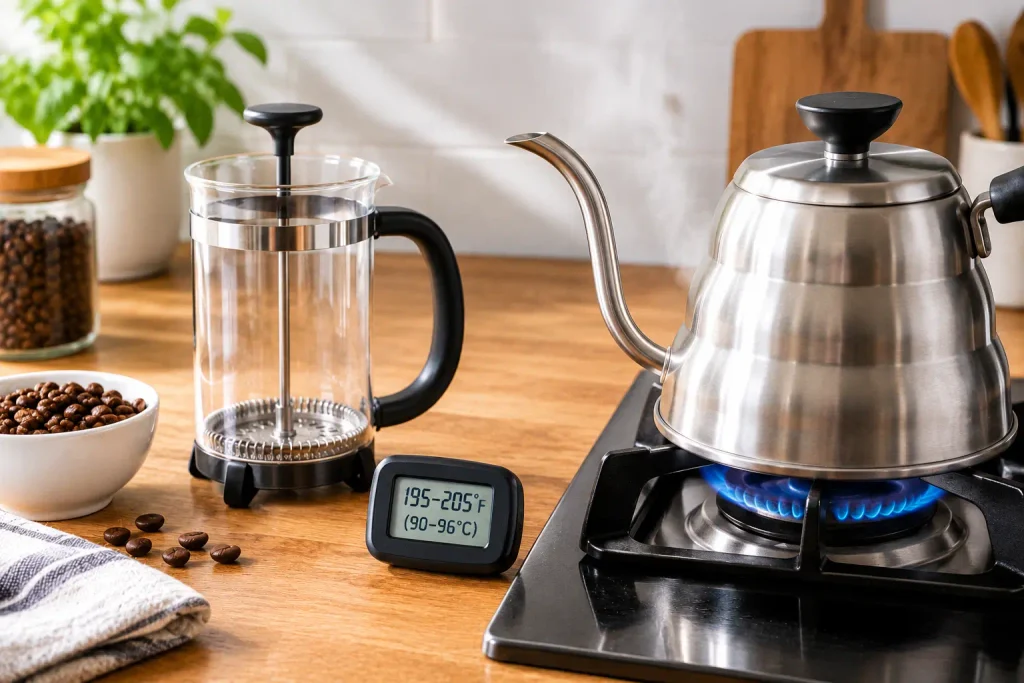
Step 1: Heat the Water
Start by heating fresh water.
The ideal temperature for coffee brewing is generally around 195–205°F (90–96°C). If you do not have a temperature-controlled kettle, allow boiling water to sit for roughly 30–60 seconds before pouring it over the coffee.
Avoid using water that has been repeatedly boiled because fresh water can help produce a cleaner-tasting cup.
Step 2: Grind Your Coffee
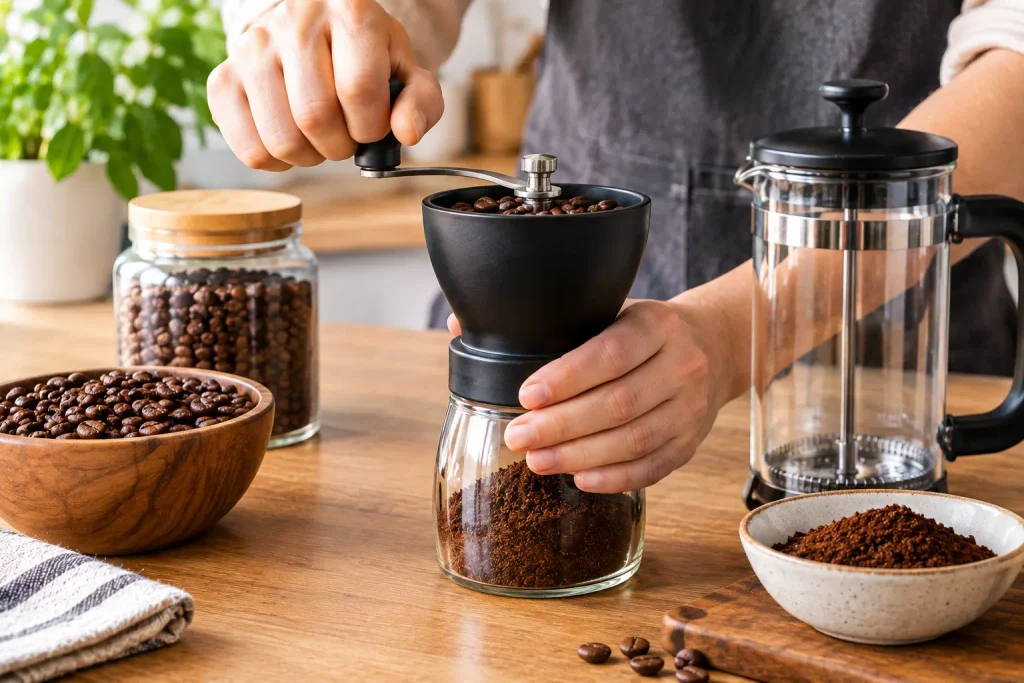
Measure your coffee beans and grind them to a coarse consistency.
The grounds should look noticeably larger than espresso grounds. A coarse grind helps make the coffee easier to filter and reduces the chance of excessive bitterness.
A consistent grinder can make this process much easier. If you want to learn more about grinding coffee and spices, see our complete coffee and spice grinder guide.
Step 3: Preheat the French Press
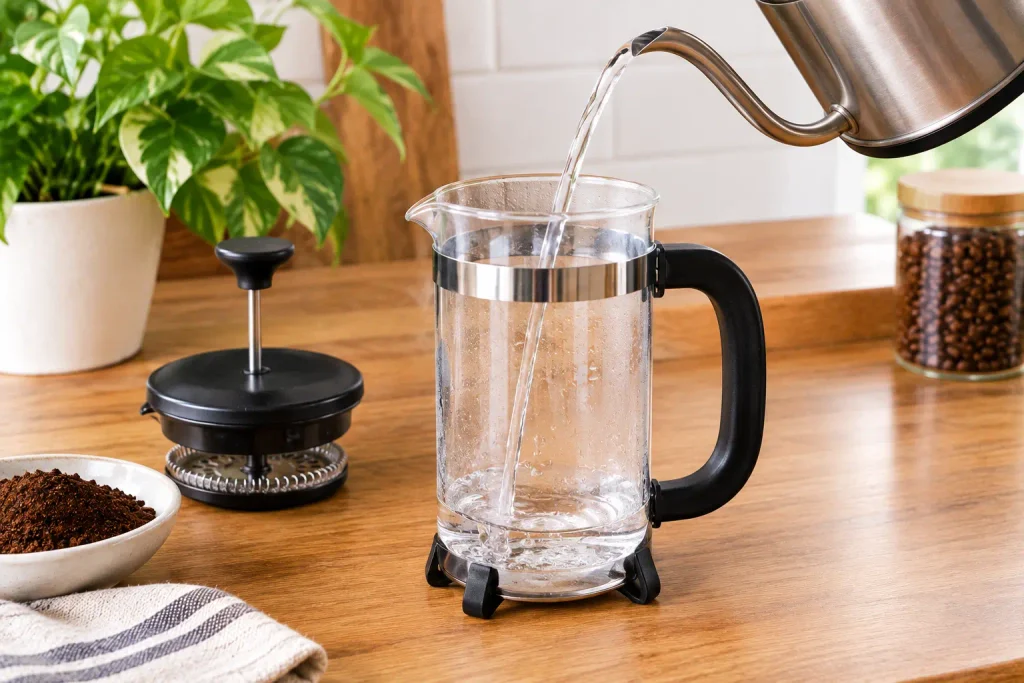
Pour a small amount of hot water into the French press and swirl it around for a few seconds.
Discard the water.
Preheating the French press helps reduce the temperature drop when you begin brewing.
Step 4: Add the Coffee Grounds
Add your measured coffee grounds to the bottom of the French press.
For a standard 300 ml brew, start with around 20 grams of coffee and adjust the amount according to your taste.
Make sure the coffee grounds are distributed relatively evenly before adding the water.
Step 5: Add Hot Water
Slowly pour the hot water over the coffee grounds.
Try to wet all of the grounds rather than pouring the water into only one area. A gentle circular pour can help ensure that the grounds are evenly saturated.
Once you have added the desired amount of water, give the mixture a gentle stir.
Step 6: Let the Coffee Brew
Place the lid on the French press, but do not press the plunger down yet.
Allow the coffee to brew for approximately 4 minutes.
The exact brewing time can be adjusted depending on the coffee and your preferred flavor.
If your coffee tastes weak, you can experiment with a slightly longer brewing time. If it tastes bitter or overly strong, try reducing the brewing time.
Step 7: Press the Plunger Slowly
After brewing, slowly press the plunger downward.
Do not force it. If the plunger becomes difficult to press, lift it slightly and continue gently.
Pressing too aggressively can disturb the coffee grounds and push more sediment into your cup.
Step 8: Pour and Enjoy
Pour the freshly brewed coffee into your mug immediately.
Leaving the coffee sitting in the French press with the grounds can cause it to continue extracting, which may make it stronger and more bitter over time.
For the best experience, serve the coffee soon after brewing.
How to Make French Press Coffee Less Bitter
If your French press coffee tastes bitter, several factors could be responsible.
Use a Coarser Grind
Very fine coffee grounds can extract too quickly and may produce a bitter flavor.
Try using a coarser grind and see whether the flavor improves.
Reduce the Brewing Time
If you are brewing for significantly longer than four minutes, try reducing the brewing time.
Small changes can make a noticeable difference.
Check Your Water Temperature
Extremely hot water can contribute to over-extraction. Allow boiling water to cool slightly before brewing.
Use Fresh Coffee
Old coffee beans may produce a flat or unpleasant flavor.
For better results, store your coffee beans in an airtight container away from direct sunlight, heat, and moisture.
How to Make French Press Coffee Stronger
If you prefer stronger coffee, you do not necessarily need to dramatically increase the brewing time.
Instead, try increasing the amount of coffee while keeping the water amount the same.
For example, if you normally use 20 grams of coffee for 300 ml of water, try increasing the coffee to around 22–24 grams.
This allows you to experiment with strength without dramatically changing the brewing process.
Common French Press Mistakes to Avoid
Using the Wrong Grind Size
One of the most common mistakes is using coffee that is too finely ground.
A coarse grind is generally more suitable for French press brewing.
Using Old Coffee
Coffee loses freshness over time, especially after grinding.
Grinding whole beans shortly before brewing can help improve the aroma and flavor.
Using Too Much Coffee
Adding too much coffee can result in an unnecessarily strong or unbalanced drink.
Start with a simple ratio and adjust gradually.
Brewing for Too Long
Longer brewing does not always mean better coffee. Over-extraction can create unpleasant bitterness.
Start with around four minutes and adjust according to taste.
Leaving Coffee in the French Press
Once the coffee has finished brewing, pour it into your cup or another container.
Keeping it in contact with the grounds can continue the extraction process.
How to Clean a French Press
Cleaning your French press after every use is important.
First, remove the remaining coffee grounds and rinse the glass container with warm water. Separate the plunger components when necessary and rinse away any coffee residue.
For deeper cleaning, use mild dish soap and thoroughly rinse all parts before allowing them to dry.
Coffee oils can build up over time, so occasional deep cleaning can help keep your French press tasting fresh.
If you use other coffee equipment at home, you may also find our guide on How to Clean a Coffee Machine Without Vinegar useful.
French Press vs. Coffee Machine
A French press is different from an automatic coffee machine in several ways.
A French press gives you more direct control over the coffee-to-water ratio, grind size, water temperature, and brewing time.
Automatic coffee machines, on the other hand, are often more convenient when you want to prepare coffee quickly with minimal effort.
If you are deciding which type of coffee maker is right for your home, check out our guide to choosing the right coffee maker.
You can also learn the basics of operating different machines in our How to Use a Coffee Machine – Step-by-Step Guide.
How to Get Better-Tasting Coffee at Home
French press brewing is only one part of making great coffee.
The quality of your beans, grind size, water temperature, brewing ratio, and equipment all affect the final cup.
If you want to improve your overall coffee-making technique, our How to Brew the Perfect Cup of Coffee at Home guide covers several popular brewing methods and useful tips.
Final Thoughts
Learning how to make French press coffee at home is simple once you understand the basic process.
Start with freshly ground coarse coffee, use hot but not aggressively boiling water, follow a reasonable coffee-to-water ratio, and allow the coffee to brew for around four minutes.
From there, experiment with the grind size, coffee amount, water temperature, and brewing time until you find the flavor you enjoy most.
With a little practice, a French press can become one of the easiest ways to make flavorful coffee at home.