
There is nothing quite like opening a fresh bag of coffee and enjoying its rich aroma. But if your coffee tastes flat, bitter, or less flavorful than usual, poor storage might be the reason. Even high-quality coffee beans can lose their aroma when exposed to air, heat, light, and moisture.
The good news is that you do not need expensive equipment to protect your coffee. A few simple storage habits can help preserve its flavor and make your daily coffee routine more enjoyable.
In this guide, you will learn how to store coffee beans properly, which containers work best, whether refrigeration is a good idea, and how to keep whole beans and ground coffee fresh for longer.
Why Proper Coffee Storage Matters
Roasted coffee beans contain aromatic compounds that contribute to their distinctive flavor and smell. After roasting, these compounds gradually change as the beans interact with their surroundings.
Exposure to oxygen can speed up flavor deterioration. Moisture can affect the beans and encourage mold under unsuitable conditions, while heat and direct sunlight can accelerate quality loss.
According to the National Coffee Association, proper coffee storage is an important part of maintaining coffee quality.
Whether you enjoy a morning drip coffee or a rich espresso, storing your beans correctly helps you get more enjoyment from every batch.
1. Choose an Airtight Coffee Container
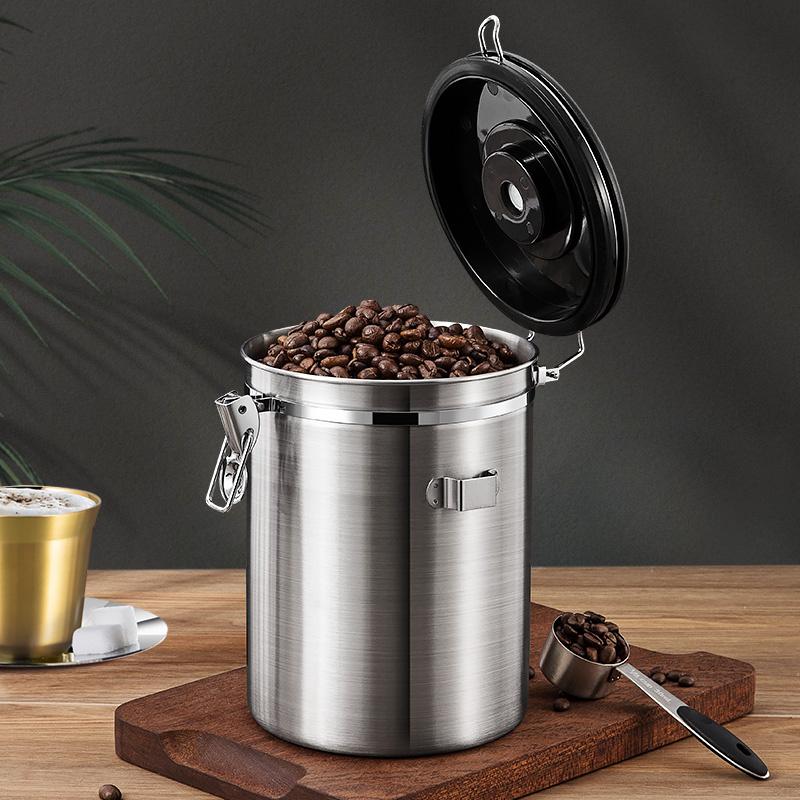
One of the easiest ways to store coffee beans is to use an airtight container. A good seal reduces exposure to fresh air and helps protect the beans from surrounding odors and moisture.
Look for a container with a secure lid and a reliable sealing mechanism. Stainless steel, ceramic, and suitable glass containers can all work well when they provide an effective airtight seal.
You do not necessarily need an expensive coffee canister. A clean, food-safe container that seals properly can be enough.
If your coffee comes in a resealable bag with a suitable one-way valve, you can also keep using the original packaging as long as it closes securely.
2. Keep Coffee Away from Light
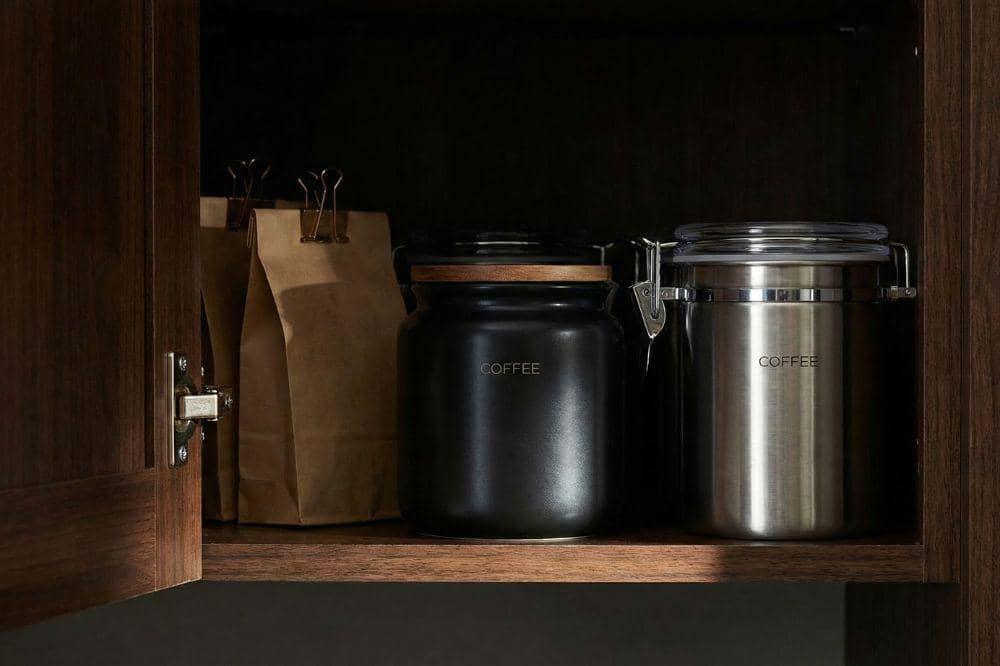
Clear glass jars can look attractive on a kitchen counter, but direct light is not ideal for long-term coffee storage.
Light exposure can contribute to flavor deterioration, especially when coffee sits in a sunny location for extended periods.
An opaque container is a practical choice because it blocks light while keeping the beans accessible.
If you prefer a clear jar, place it inside a closed cupboard instead of leaving it beside a bright window.
3. Store Coffee in a Cool, Dry Place

Heat and moisture can affect the quality of roasted coffee. That is why a cool, dry cupboard or pantry is usually a sensible place for everyday storage.
Avoid keeping your coffee container directly beside an oven, stove, dishwasher, or other source of heat. A countertop that receives strong afternoon sunlight is also less suitable.
You do not need to refrigerate your everyday coffee supply to keep it fresh. A stable room-temperature environment, away from heat and moisture, is generally more convenient.
4. Buy Only as Much Coffee as You Need

Buying coffee in bulk may seem economical, but a large bag can lose its freshness if it remains open for too long.
Think about how much coffee you normally drink in a week. If you prepare one or two cups each morning, a smaller bag may be more practical than a large package that takes months to finish.
Buying smaller quantities more frequently helps you use your coffee while its aroma is still enjoyable.
Whenever possible, look for a roast date rather than relying only on a best-before date. The roast date provides useful information about when the beans were roasted.
5. Store Whole Beans Instead of Grinding Everything in Advance

Whole beans generally preserve their flavor better than ground coffee because less of their surface area is exposed to oxygen.
Grinding increases the surface area of coffee, allowing aroma to escape more quickly. For this reason, it is usually best to grind only what you need immediately before brewing.
If you do not own a grinder, buy smaller quantities of ground coffee and seal the package carefully after every use.
Want to learn more about grinding? Read our guide on how to use a coffee and spice grinder for practical tips on preparing coffee at home.
6. Should You Store Coffee Beans in the Refrigerator?
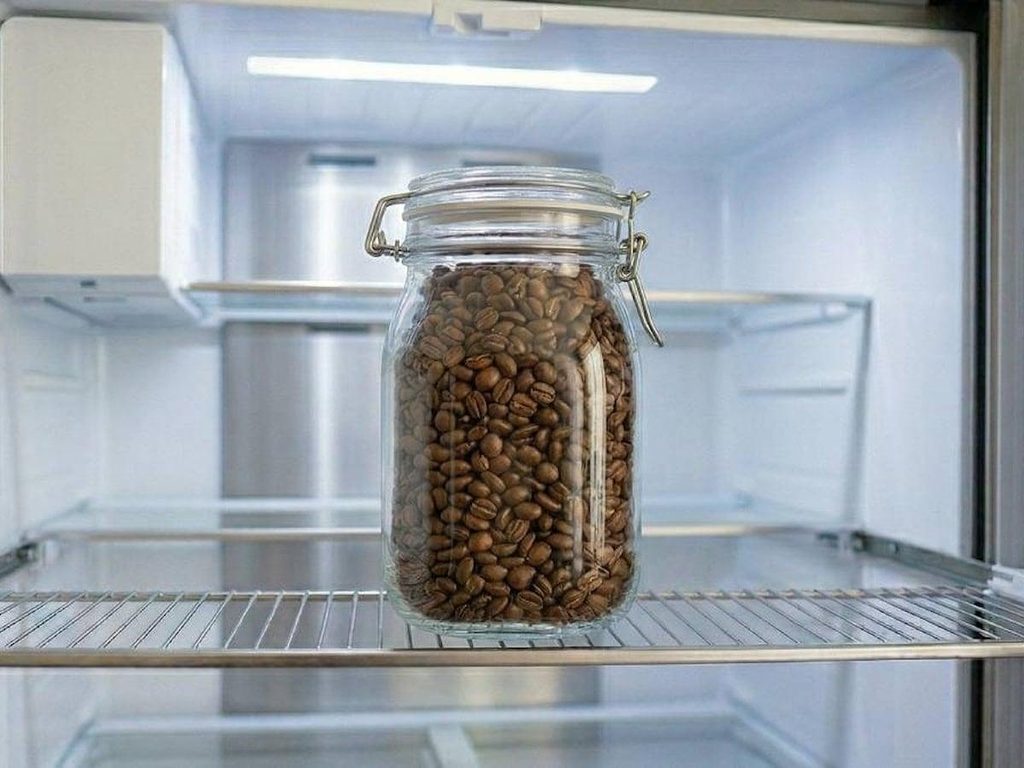
For most people, the refrigerator is not the best place for everyday coffee storage.
Coffee can absorb odors from nearby foods, and repeated changes in temperature may introduce condensation when a cold container is opened.
Instead, keep the amount you plan to use regularly in an airtight container in a cool, dark cupboard.
Refrigeration is not necessary for maintaining the quality of a typical daily coffee supply. Protecting the beans from air, moisture, light, and heat is a more practical starting point.
7. Can You Freeze Coffee Beans?
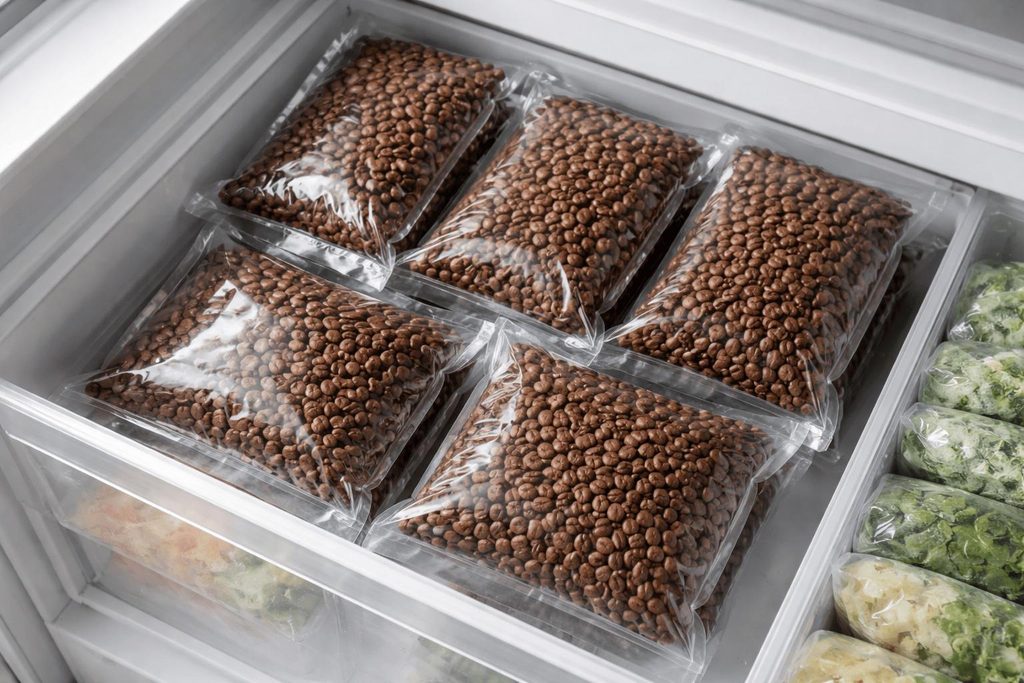
Yes. Freezing can be useful when you have more whole beans than you can reasonably use in the near future.
The key is to protect the beans from moisture and repeated temperature changes.
Follow these steps:
- Divide the extra coffee into small portions that you can use separately.
- Place each portion in a suitable airtight, moisture-resistant freezer bag or container.
- Remove as much excess air as practical before sealing.
- Label each portion with the coffee type and storage date.
- Remove only the portion you need, keeping the remaining portions sealed in the freezer.
Allow a sealed portion to reach room temperature before opening it. This helps reduce condensation forming on the cold beans.
Avoid repeatedly thawing and refreezing the same portion. For your everyday supply, room-temperature storage in an airtight container is usually simpler.
For additional background, see the National Coffee Association’s coffee information resources.
8. Keep Ground Coffee Properly Sealed
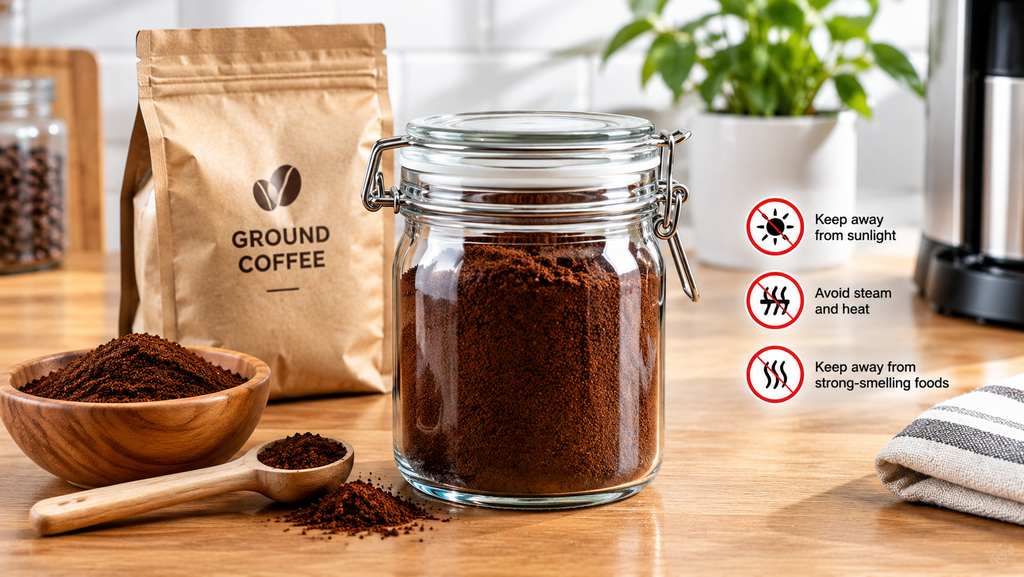
Ground coffee requires extra attention because grinding exposes more surface area to air.
After opening a package, close it tightly or transfer the coffee to a clean, airtight container. Keep it away from sunlight, steam, heat, and strong-smelling foods.
Try not to leave a measuring spoon inside the container, especially if it is damp. Always use a clean, dry spoon to avoid introducing moisture.
For the best flavor, prepare only the amount you need for each brew. Small changes in your storage routine can make your coffee taste more consistent from one day to the next.
9. Clean Your Coffee Equipment Regularly
Proper storage is only one part of making better coffee. Residual coffee oils and old grounds can also affect flavor.
Wash removable parts of your coffee maker according to the manufacturer’s instructions. Empty used grounds after brewing and allow washable components to dry completely before putting them away.
If your grinder develops a buildup of coffee particles or oils, clean it according to its manual.
You can also explore our guides on how to use a coffee machine and how to brew the perfect cup of coffee at home to improve your everyday brewing routine.
Common Coffee Storage Mistakes to Avoid
A few habits can make it harder to maintain fresh-tasting coffee:
- Leaving the bag open between uses.
- Keeping coffee beside a hot stove or in direct sunlight.
- Using a decorative container that does not seal properly.
- Grinding an entire bag before you need it.
- Storing coffee near strong-smelling foods.
- Frequently opening a frozen container while the beans are still cold.
Correcting these mistakes does not require a complicated setup. Start with a reliable seal, a cool cupboard, and smaller quantities of coffee.
Frequently Asked Questions
How long do coffee beans stay fresh after opening?
The exact period depends on the roast, packaging, storage conditions, and personal taste. Properly stored beans gradually lose aroma over time, so buying manageable quantities and sealing them promptly is a sensible approach.
Is an airtight container better than the original coffee bag?
Not always. A good resealable coffee bag with an effective barrier and valve can work well. An airtight, opaque container is another useful option, particularly if the original packaging does not reseal properly.
Can I store coffee beans in a glass jar?
Yes, provided the jar is clean and seals effectively. If it is transparent, keep it inside a cupboard to limit light exposure.
Should I freeze ground coffee?
Freezing is generally more practical for whole beans stored in carefully sealed portions. For ground coffee, buying smaller amounts and keeping them airtight in a cool, dark place is a convenient everyday strategy.
How can I tell whether my coffee has lost freshness?
Coffee that has lost freshness may smell less aromatic and taste flat or stale. If the beans have become damp, show visible mold, or smell musty, do not use them.
Final Thoughts
Learning how to store coffee beans properly is a simple way to get more enjoyment from your daily cup. Keep your coffee sealed, protect it from light and heat, avoid unnecessary moisture, and grind only what you need.
You do not need a collection of expensive accessories to build a better coffee routine. Start with a suitable container, buy an amount you can use in a reasonable time, and store your beans thoughtfully.
At Famous Cafe, we share practical coffee tips, helpful buying guides, and product reviews to make your home coffee experience easier. Explore our coffee maker guides, learn about making iced coffee at home, and discover more ways to enjoy coffee in your own kitchen.